Looking for a proven educational approach on Koh Phangan?
Montessori methods offer research-backed benefits that help children develop independence, creativity, and lifelong learning skills. Here’s what makes this child-centric approach stand out—and why it matters for families on the island.
What Is Montessori Education?
Children learn best when they control the pace.
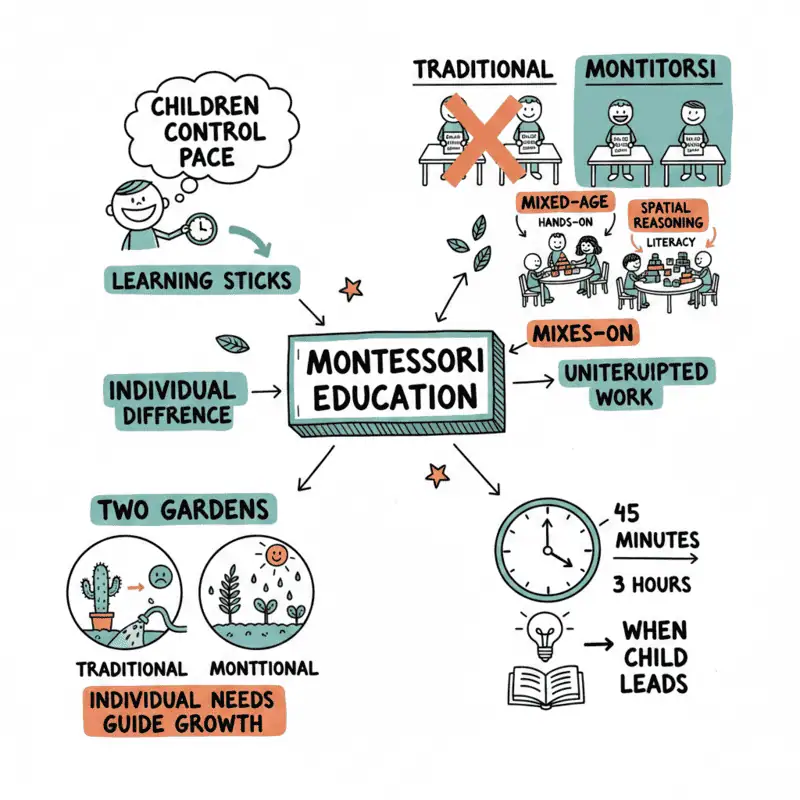
Traditional education often treats every five-year-old the same. Same lessons. Same timeline. Same expectations. Montessori takes a different path. It lets each child move at their own speed, choosing activities that match their interests and developmental stage.
Here’s what this looks like in practice: one child might spend 45 minutes building with blocks, developing spatial reasoning and patience. Another might gravitate toward letter tracing, building literacy skills when they’re genuinely ready. Both are learning—just in ways that honor their individual journey.
The authentic Montessori difference matters. Not every program that uses the Montessori name follows the actual philosophy. If you see rows of desks and identical worksheets for everyone, that’s not real Montessori.
Authentic programs feature mixed-age classrooms, child-sized furniture, hands-on materials, and uninterrupted work periods of up to three hours where children choose and complete their own activities.
Think of it like two gardens. In one, every plant gets the same amount of water on the same schedule—whether it’s a cactus or a fern. In the other, each plant receives exactly what it needs to thrive. Montessori is the garden where individual needs guide growth.
When the child leads, the learning sticks.
Why Choose Montessori on Koh Phangan?
Early years shape how your child sees learning forever.
Between ages 3 and 6, your child’s brain is forming millions of connections. They’re not just learning facts—they’re learning how to learn. Montessori taps into this critical window by treating children as naturally curious, capable people.
Montessori calls this period the “absorbent mind.” Children at this age have an extraordinary capacity for mental absorption. They move from unconscious learning (like acquiring language as toddlers) to conscious, focused engagement with their environment. The Montessori prepared environment is designed to align with these natural developmental cycles.
Research shows Montessori students often demonstrate stronger creativity, working memory, and social-emotional skills by the end of kindergarten. They’re not just memorizing facts; they’re building problem-solving abilities that last.
Instead of sitting still and listening, children move freely in the classroom. They choose work that calls to them. They repeat activities until they’ve mastered them. This builds intrinsic motivation—they learn because they want to, not because someone told them to.
Here’s a concrete example: a Montessori child pouring water from pitcher to pitcher isn’t just playing. They’re developing hand-eye coordination, concentration, and understanding of volume. These skills transfer directly to writing, mathematics, and self-regulation later.
Sensitive periods make the difference. Maria Montessori identified that children experience windows of time when they’re especially receptive to learning specific skills—order, language, movement, social interaction. When education aligns with these sensitive periods, learning feels natural and joyful rather than forced.
Why this matters on Koh Phangan: Families here embrace natural living, international perspectives, and intentional parenting. Montessori principles align beautifully with island life—outdoor learning, respect for the environment, mixed-age communities, and learning at a human pace.
The island’s diverse international community means children already experience the cultural exchange and independence that Montessori classrooms cultivate.
When learning feels disconnected from a child’s interests or developmental readiness, they often tune out. They might pass the test, but they don’t develop the love of discovery that carries them through life.
Picture learning to cook. Would you rather watch someone lecture about recipes, or actually chop vegetables, taste spices, and adjust seasoning yourself? Montessori is the hands-on kitchen. It’s learning by doing, guided by genuine curiosity.
Build the love of learning early, and it lasts a lifetime.
How Montessori Principles Shape Lifelong Learners
Independence isn’t just a skill—it’s confidence you can carry.
Montessori education doesn’t just prepare children for the next grade. It prepares them for life. When a four-year-old learns to zip their own jacket, solve peer conflicts through words, or clean up their workspace, they’re practicing agency. They’re discovering: I can figure this out.
The environment supports independence. Montessori classrooms are carefully prepared for self-directed learning. Child-sized furniture means children can move freely without adult help. Materials are placed within reach. Freedom to choose, work, and problem-solve happens without constant adult intervention.
Teachers guide and observe, but they step back to let children discover their own capabilities.
Here’s what this builds: when a Montessori student spills milk, they don’t wait for an adult to fix it. They grab a cloth and clean it themselves. This small moment builds responsibility and resilience—traits that show up later when they tackle challenging math problems or navigate social situations.
Research supports the approach. Studies show that Montessori students develop stronger executive functioning skills, particularly in working memory and sustained concentration. A recent national study found that Montessori kindergarten children scored significantly higher in reading, memory, and social-emotional understanding compared to peers in traditional programs.
The counter-example matters too: when adults constantly step in to “help,” children can learn helplessness. They wait to be told what to do next. They don’t trust their own abilities.
Imagine learning to ride a bike. If someone holds the seat forever, you never discover your own balance. But when they let go—with encouragement nearby—you find your center. Montessori is that gentle release that builds real confidence.
These skills compound over time:
- Ages 3-6: Children master practical life skills, develop concentration, and build self-confidence
- Elementary years: Independence translates to self-directed learning, research skills, and collaboration
- Adolescence and beyond: The habits formed early—curiosity, resilience, self-motivation—become lifelong strengths
Independent learners become confident adults.
Montessori-Inspired Education on Koh Phangan: The ISPG Approach
Families on Koh Phangan face unique opportunities and challenges. You’re raising children in a beautiful, natural environment. You value international perspectives. You want education that honors childhood while building strong foundations for the future.
While Montessori offers one proven path, there are other research-backed approaches that share these core values. At the International School of Phangan (ISPG), we follow the British National Curriculum with a philosophy that echoes many Montessori principles—child-centric learning, hands-on exploration, respect for individual development, and deep connection to the natural world.
How ISPG Embodies Child-Centric Learning
Our FLAIR model guides everything we do:
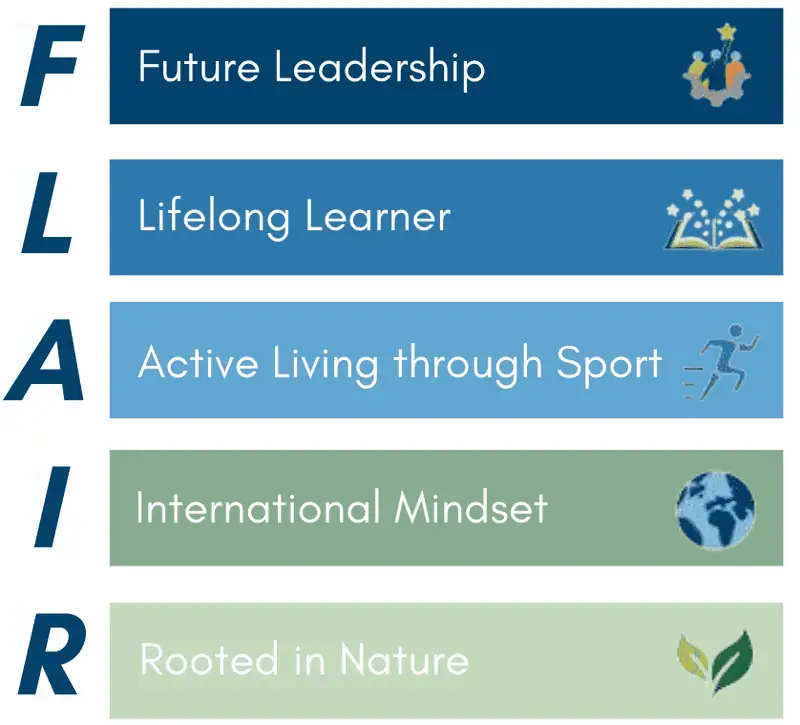
Future Leadership – We develop confident, capable children who think critically and solve problems independently.
Lifelong Learning – Like Montessori’s focus on intrinsic motivation, we cultivate curiosity and a genuine love of discovery that extends far beyond test scores.
Active Living – Children learn through movement, exploration, and hands-on experiences across our curriculum.
International Mindset – We welcome families from around the world and prepare children for a globally connected future.
Rooted in Nature – Koh Phangan’s stunning environment becomes part of our classroom. Children learn outdoors, connect with the natural world, and develop environmental awareness.
Our Curriculum Stages
Kindergarten: We encourage curiosity, confidence, and foundational skills through a blend of structured and play-based learning. Children develop literacy, numeracy, and communication skills at their own pace—much like Montessori’s mixed-age, self-paced approach.
Primary: Learning becomes more structured while retaining creativity and choice. Students build academic foundations in English, Mathematics, Science, and Humanities through engaging, hands-on experiences.
Key Stage 2 (Years 4-6):
Here’s what this looks like in practice: one child might spend 45 minutes building with blocks, developing spatial reasoning and patience. Another might gravitate toward letter tracing, building literacy skills when they’re genuinely ready. Both are learning—just in ways that honor their individual journey.
more rigorous and interdisciplinary. Students develop critical thinking, global awareness, and leadership skills that prepare them for secondary education and beyond.Supporting the Whole Child
Education isn’t just about academics. We support your child’s complete development:
- Nutrition: Our daily meals prioritize proteins, healthy fats, and fresh ingredients. We’ve moved away from carbohydrate-heavy menus to support brain development and sustained energy. All meals are free of nuts, shellfish, and molluscs.
- Small Class Sizes: Individual attention ensures every child’s learning journey is supported and celebrated.
- International Community: Your child learns alongside peers from diverse backgrounds, building cultural understanding and global citizenship.
Why Families Choose ISPG
You’re not choosing between Montessori principles and structured curriculum. At ISPG, you get both: the warmth and child-centric approach that honors individual development, plus the rigor and global recognition of the British National Curriculum.
We guide you every step of the way. Our educators are trained to observe, support, and adapt to your child’s unique needs. We believe children are naturally capable—and our role is to create the environment where they discover that capability themselves.
Start Your Journey with Research-Backed, Child-Centric Education
Whether you’re drawn to Montessori philosophy or exploring educational options on Koh Phangan, the principles remain the same: children thrive when they’re respected, engaged, and supported to learn at their own pace.
At ISPG, we honor these principles while providing the structure and academic excellence that prepares children for future success.
Ready to discover how we support your child’s unique learning journey?
Let’s explore how our approach can support your family’s educational goals on beautiful Koh Phangan Island.